Buying a domain name can look deceptively simple.
You search for a name, see a price, and decide whether to buy it. But the number displayed next to a domain is only part of the story.
A domain might cost a few dollars to register and considerably more to renew. Another domain may have a low promotional price in the first year but a much higher standard renewal price. A short, desirable domain may be classified as a premium domain and cost hundreds, thousands, or even much more.
And then there are transfer fees, restoration fees, privacy services, and other costs that can make the actual cost of owning a domain different from the price you first saw.
So, how much does a domain name really cost?
The short answer is: it depends on the domain extension, registrar, pricing model, and the name itself.
This guide explains how domain pricing works, what you should actually compare, and how to avoid choosing a registrar based on a cheap first-year price that becomes expensive later.
How Much Does a Domain Name Cost?
A standard domain name typically costs somewhere between a few dollars and several tens of dollars per year, depending on the extension and registrar.
For example, the price of:
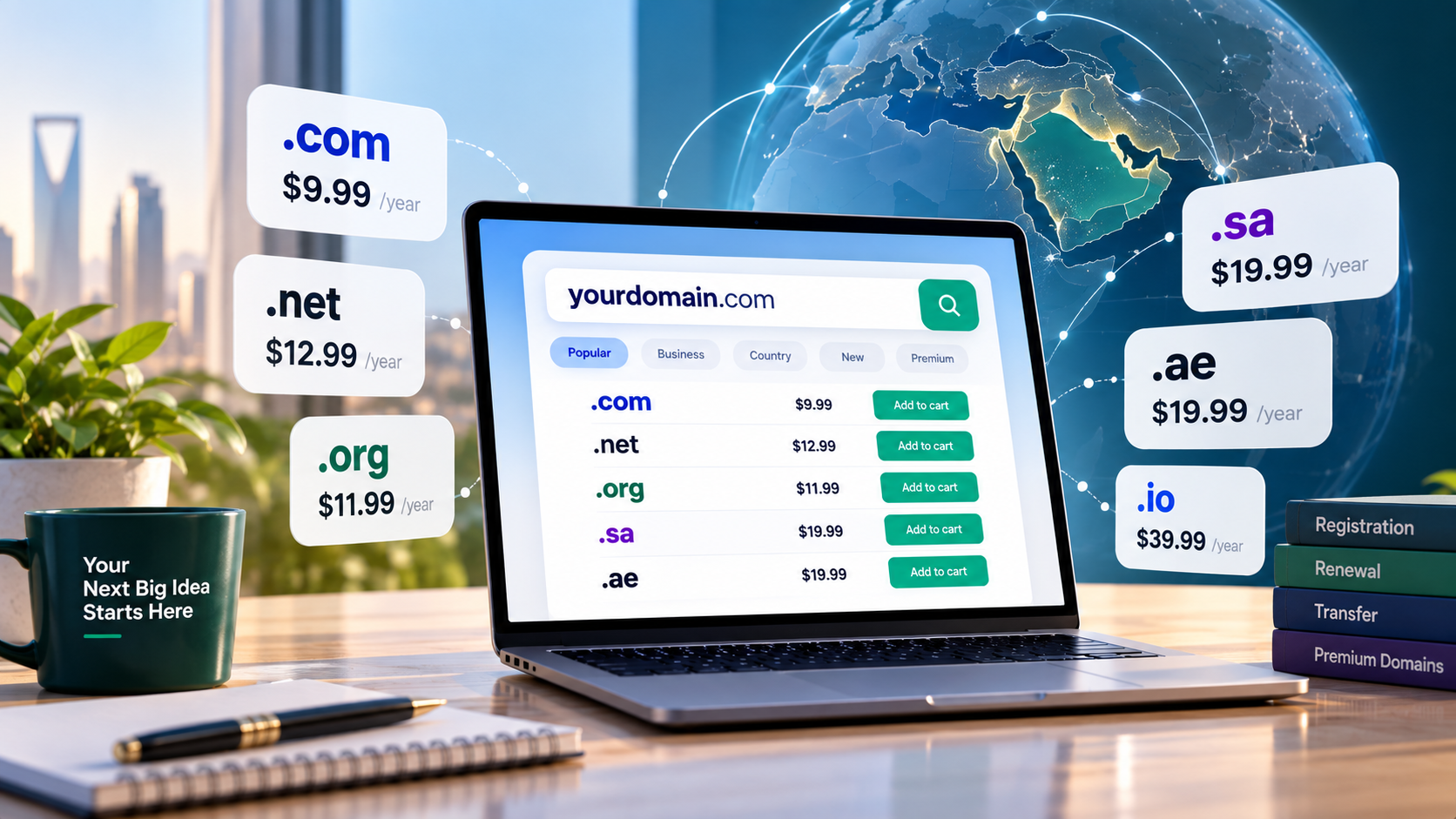
.com.net.org.sa.ae.co.io.ai
can be very different.
There is no universal price for “a domain.”
Each domain extension has its own registry, wholesale pricing structure, policies, and market demand. Registrars then set their retail prices and may offer discounts, promotions, or different pricing tiers.
That is why you can find the same domain extension selling for different prices at different registrars.
The Four Domain Prices You Should Always Check
When comparing domain registrars, don’t look at just one number.
There are four prices that matter.
1. Registration price
This is what you pay when you register an available domain for the first time.
For example:
example.com— $12.99 for the first year
This is the initial registration price.
However, this may not be the price you pay in future years.
2. Renewal price
The renewal price is what you pay to keep the domain for another year after the initial registration period.
For example:
| Price | |
|---|---|
| First-year registration | $4.99 |
| Standard renewal | $16.99 |
A registrar advertising the $4.99 price may look cheaper at first, but if you plan to keep the domain for five or ten years, the renewal price matters much more.
ICANN recommends that registrants understand their registrar’s renewal terms and keep their registration current to avoid losing the domain.
This is one of the most important things to check before buying a domain.
3. Transfer price
A domain transfer is different from registering a new domain.
When you move a domain from one registrar to another, the new registrar may charge a transfer fee. For many generic top-level domains, the transfer typically involves an additional year of registration, although the exact rules depend on the extension.
ICANN notes that registrars can set their own transfer prices for applicable gTLD transfers.
Before transferring a domain, check both the transfer price and whether the transfer extends the expiration date.
4. Restoration price
Things become more expensive when a domain expires and passes into a recovery or redemption stage.
Depending on the extension and registrar, restoring an expired domain can involve a substantial additional fee.
For this reason, renewing before expiration is almost always preferable to trying to recover an expired domain later.
ICANN explains that expired domains can enter different stages of the expiration lifecycle, and once a domain is deleted and released, there may be no guarantee that the previous registrant can get it back.
Why Are Some Domain Extensions More Expensive Than Others?
The extension is one of the biggest factors affecting domain pricing.
A .com domain does not necessarily have the same underlying cost as a .ai, .sa, or .ae domain.
Every TLD has its own registry operator, policies, and commercial structure.
For example, the wholesale fees associated with a domain are paid by registrars to the relevant registry, while the registrar then sells the domain to the customer at its retail price.
This means the final price you see as a customer can reflect several components:
Registry cost + applicable fees + registrar costs + operating costs + margin + promotions
The result is the retail price displayed in the registrar’s domain search.
Why Does the Same Domain Cost Different Amounts at Different Companies?
You might search for the same .com domain at three different registrars and see three different prices.
That’s normal.
Registrars compete using different pricing strategies.
One company may offer:
- Very low first-year prices
- Higher renewal prices
Another may offer:
- Higher registration prices
- Lower renewals
Another may offer:
- Similar registration and renewal prices
- Better support or domain-management tools
And another may use aggressive promotions to acquire new customers.
So when comparing registrars, don’t ask:
“Who has the cheapest domain?”
Ask:
“Who offers the best total cost and service over the period I expect to own the domain?”
That’s a much better comparison.
Promotional Domain Prices Can Be Misleading
One of the most common mistakes when buying a domain is focusing entirely on the promotional price.
You might see:
.COM — $0.99
That sounds extremely cheap.
But what happens next year?
If the standard renewal is $18.99, the economics are completely different.
This doesn’t necessarily mean the promotion is bad. Promotional pricing can be a legitimate way for registrars to attract new customers.
The problem is simply not knowing what happens after the promotional period.
Before purchasing, always look for:
Register → Renew → Transfer
Those three prices tell you much more than the headline offer.
How Much Does a .com Domain Cost?
.com remains one of the most recognized domain extensions in the world.
The retail price varies between registrars and can also vary depending on promotions and the specific domain.
For a normal, non-premium .com, you will generally see a standard annual registration or renewal price rather than a one-time purchase price.
The important point is that you are not buying the domain forever.
You are registering it for a specific period.
If you want to keep using it, you need to renew it.
ICANN states that domain registrations are typically registered for periods ranging from one to ten years, depending on the applicable domain and registrar rules.
How Much Does a .sa Domain Cost?
.sa is Saudi Arabia’s country-code top-level domain.
Its pricing is determined within the Saudi domain ecosystem and can differ from the pricing of generic extensions such as .com.
Eligibility requirements also apply to .sa registrations.
For businesses targeting Saudi Arabia, the price should therefore be evaluated alongside:
- Eligibility
- Registration requirements
- Renewal pricing
- Transfer rules
- DNS management
- Registrar support
A cheap domain isn’t particularly useful if it doesn’t meet the requirements of the market you’re targeting.
For a detailed explanation, see our guide to .sa domains.
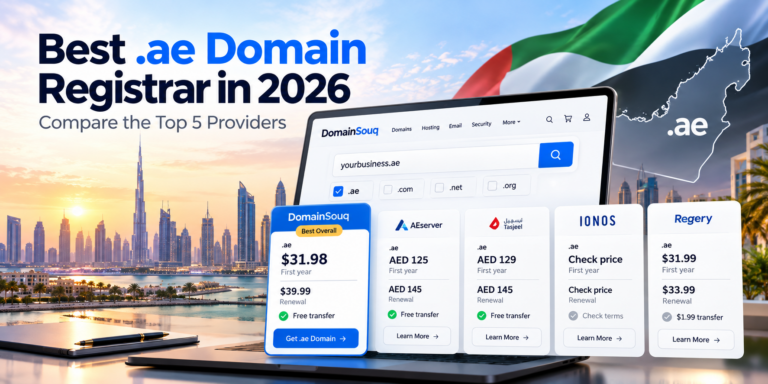
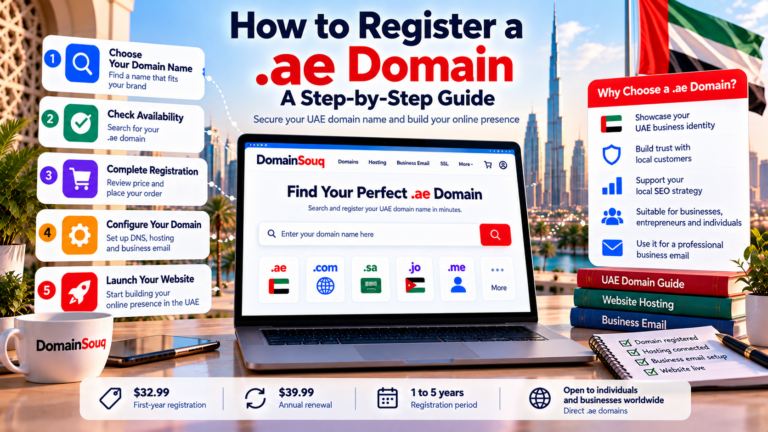
How Much Does a .ae Domain Cost?
.ae is the country-code domain for the United Arab Emirates.
Like .sa, it has its own registry policies and pricing structure.
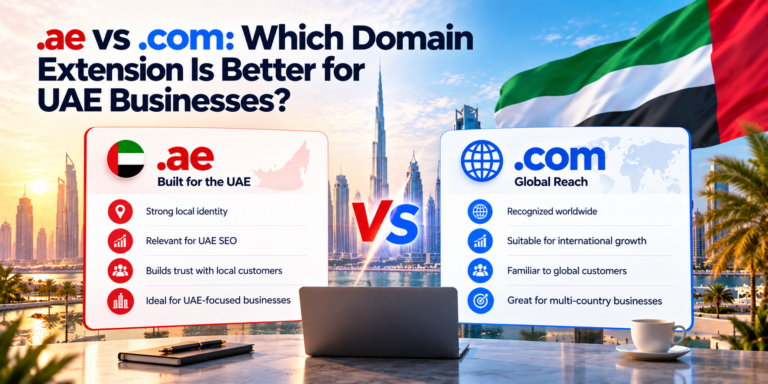
For a UAE-focused business, .ae can provide a strong local identity and may be a better branding choice than a generic extension in some situations.
Again, don’t compare the first-year price alone.
Check the complete cost of:
Registration + renewal + transfer + any additional services
What Is a Premium Domain?
Not all available domains are priced equally.
Some domain names are classified as premium domains because they are considered particularly valuable.
Examples might include:
- Very short domains
- Common dictionary words
- Highly desirable business terms
- Generic commercial keywords
- Memorable combinations
- Highly sought-after names
A normal domain might cost $10–$20 per year.
A premium domain could cost:
$100
$1,000
$10,000
or significantly more.
The value of a premium domain is determined by factors such as scarcity, length, memorability, commercial relevance, brandability, and demand.
Premium Domain Pricing Can Work Differently
Premium domains can have a different pricing model from ordinary domains.
You may encounter:
Premium registration price
A higher price when registering the domain for the first time.
Premium renewal price
A higher recurring price every year.
Aftermarket domain price
A domain already owned by someone else and offered for sale.
This distinction is extremely important.
A domain that appears to cost $2,000 may not necessarily mean you will pay $2,000 every year. In other cases, a premium domain can have both a large acquisition price and a higher annual renewal price.
Always check the renewal terms before purchasing a premium domain.
Registration vs Buying a Domain From Someone Else
There are two fundamentally different ways to acquire a domain.
Register an available domain
The domain is available for registration, so you pay the registrar’s registration price.
For example:
mynewcompany.com
may be available for a standard annual registration fee.
Buy an already-registered domain
Someone else owns the domain, and you negotiate a purchase price with the owner or through a domain marketplace.
For example:
business.com
could be worth vastly more than its ordinary registration cost because the name itself has market value.
This is why saying “a domain costs $15” is technically incomplete.
The registration cost and the market value of a domain name are two different things.
Do You Have to Pay for Domain Privacy?
This depends on the registrar, extension, and applicable registration-data policies.
Some registrars include privacy-related services at no additional cost, while others may charge separately or offer them as part of a broader package.
The important thing is to understand exactly what the service provides.
Don’t assume that paying for a “privacy” product means every piece of registration information becomes invisible in every circumstance.
Different TLDs and registry policies can have different requirements.
Do You Need to Pay for DNS?
Not necessarily.
Basic DNS management is commonly included with domain registration, although the exact services available depend on the registrar.
Some businesses choose a separate DNS provider because they need additional features such as:
- Advanced DNS controls
- Traffic management
- Security features
- High availability
- Advanced monitoring
For a normal website, however, you do not necessarily need to purchase a separate DNS service simply because you own a domain.
Do You Need Hosting to Buy a Domain?
No.
A domain and hosting are separate services.
You can register:
yourbrand.com
without purchasing hosting.
You can then use the domain for:
- A website
- Business email
- URL forwarding
- Landing pages
- Online applications
- Other services
Similarly, you can purchase hosting separately and connect your domain to it later.
This is useful because it means you do not have to purchase every service from the same company.
Does a Domain Come With Email?
Not automatically.
Owning:
yourbrand.com
does not automatically create:
info@yourbrand.com
You need an email service configured for the domain.
Some registrars bundle email services with their domain plans, while others sell email separately.
If professional email is important to your business, compare the total package rather than assuming it is included.
What Happens If You Don’t Renew Your Domain?
This is where domain pricing becomes a business issue rather than simply a purchasing decision.
If you forget to renew an important domain, your website and email can eventually stop working.
Depending on the TLD and registrar’s policies, an expired domain may pass through different stages before it is eventually deleted and potentially made available for registration again.
For a business domain, the consequences can be serious.
Imagine losing:
yourcompany.com
while it is connected to:
- Your website
- Company email
- Google Workspace or Microsoft 365
- Advertising campaigns
- Customer accounts
- Business cards
- Social media profiles
- Payment services
That’s why automatic renewal and accurate account information are worth considering.
ICANN requires registrars to provide renewal reminders for applicable gTLD registrations, but the ultimate responsibility for keeping your domain registered remains with you.
What Is the Cheapest Way to Register a Domain?
The cheapest advertised price isn’t necessarily the cheapest way to own a domain.
Instead, compare the total cost of ownership.
For example:
| Cost | Registrar A | Registrar B |
|---|---|---|
| First year | $3.99 | $11.99 |
| Renewal | $19.99 | $13.99 |
| Transfer | $12.99 | $11.99 |
| Privacy | Free | Free |
| DNS | Free | Free |
| Support | Standard | Included |
Registrar A looks cheaper when you first see the advertisement.
But Registrar B could be considerably cheaper if you intend to keep the domain for several years.
A simple formula
For a domain you expect to keep for five years:
Total cost = initial registration + four renewals + additional required fees
That is a much better way to compare registrars than looking at the first-year price.
What Should You Look for in a Domain Registrar?
Price matters, but it should not be the only factor.
Before choosing a registrar, consider:
1. Renewal pricing
This may matter more than the introductory price.
2. Supported extensions
Make sure the registrar supports the TLDs you actually need.
3. Domain management
Look for an interface that makes it easy to manage DNS, nameservers, transfers, contacts, and security.
4. Security
Useful features can include:
- Two-factor authentication
- Transfer locks
- Account security
- Domain change notifications
5. Customer support
A domain problem can become a business problem very quickly.
6. Transfer process
Make sure you can obtain the necessary authorization information and transfer your domain without unnecessary friction.
7. DNS features
If your domain is important to your business, reliable DNS management matters.
Domain Registration Is Not the Same as Domain Ownership Forever
People often say:
“I bought this domain.”
Technically, domain registration works differently.
You register the domain for a specific period under the applicable registrar and registry rules.
Your registration gives you the rights associated with that registration for the registered period, subject to the applicable policies and agreement.
When that period ends, you need to renew it if you want to continue using the domain.
This distinction becomes particularly important when calculating the long-term cost of a domain.
How Much Should You Budget for a Domain?
For a normal business website, budgeting is relatively straightforward.
You should account for:
Domain registration
Annual renewal
Email, if required
Hosting, if required
Optional security or DNS services
The domain itself may be one of the least expensive parts of running a website.
The bigger expense is often everything built around it.
For example, a small business might spend:
- $10–$25/year on the domain
- $50–$300/year on hosting
- Additional amounts for professional email, software, security, and other services
The actual numbers vary significantly by provider and requirements.
The important thing is to separate these costs instead of assuming that “the domain” includes everything.
How to Save Money on Domain Registration
There are several legitimate ways to reduce your domain costs.
Compare renewal prices
Don’t stop at the registration price.
Avoid unnecessary add-ons
Only pay for services you actually need.
Register for multiple years when appropriate
Some extensions and registrars allow registration for multiple years, which can help you secure the domain for longer and avoid forgetting renewals.
Consolidate your domains
If you own many domains, managing them through a registrar with competitive renewal pricing and good bulk-management tools can make a meaningful difference.
Use promotions strategically
Promotional pricing can be useful when the renewal cost is acceptable.
The key is knowing what you will pay later.
Why DomainSouq Shows More Than Just the First-Year Price
When comparing domain names, customers should be able to see the cost of the entire domain lifecycle—not just an attractive introductory number.
A transparent domain search should make it easy to understand:
Registration price
Renewal price
Transfer price
Availability
And, where applicable:
Premium pricing
This gives you the information needed to make an informed decision before registering a domain.
Frequently Asked Questions
Is a domain a one-time purchase?
No. A standard domain registration is normally registered for a specific period. You must renew it to continue using it.
Why is the first-year domain price cheaper?
Registrars may use promotional pricing to attract new customers. The normal renewal price may be higher.
Is domain renewal more expensive than registration?
It can be. It depends on the registrar, TLD, and whether a promotion was applied to the initial registration.
How much does a .com domain cost?
There is no single universal retail price. The cost depends on the registrar, promotion, and whether the domain is a standard or premium name.
Are premium domains expensive?
They can be. Premium domains can range from relatively modest amounts to thousands or even much more, depending on the domain’s perceived value and pricing model.
Do I need hosting to register a domain?
No. Domain registration and hosting are separate services.
Do I need to pay for DNS?
Not necessarily. Many registrars include basic DNS management with domain registration.
Can I transfer my domain to another registrar?
For many generic domains, yes, subject to applicable transfer rules and restrictions. ICANN’s transfer policy includes restrictions such as the first 60 days after initial registration and the first 60 days after a previous transfer.
What happens if my domain expires?
The exact process depends on the TLD and registrar, but an expired domain can eventually stop resolving and may later be deleted and become available for registration again.
The Real Cost of a Domain Name
The cheapest domain is not necessarily the domain with the lowest registration price.
A better question is:
How much will this domain cost me over the years I plan to own it?
Compare the registration price, renewal price, transfer price, premium status, included services, and the registrar’s overall quality.
For a personal project, saving a few dollars may be reasonable.
For a business domain that you expect to use for five, ten, or twenty years, renewal pricing, security, reliability, and support are far more important than saving a few dollars in the first year.
Your domain may be one of the smallest expenses in your business—but it can be one of the most important assets.
Choose it carefully, understand the pricing before you register it, and make sure you know what it will cost to keep it.